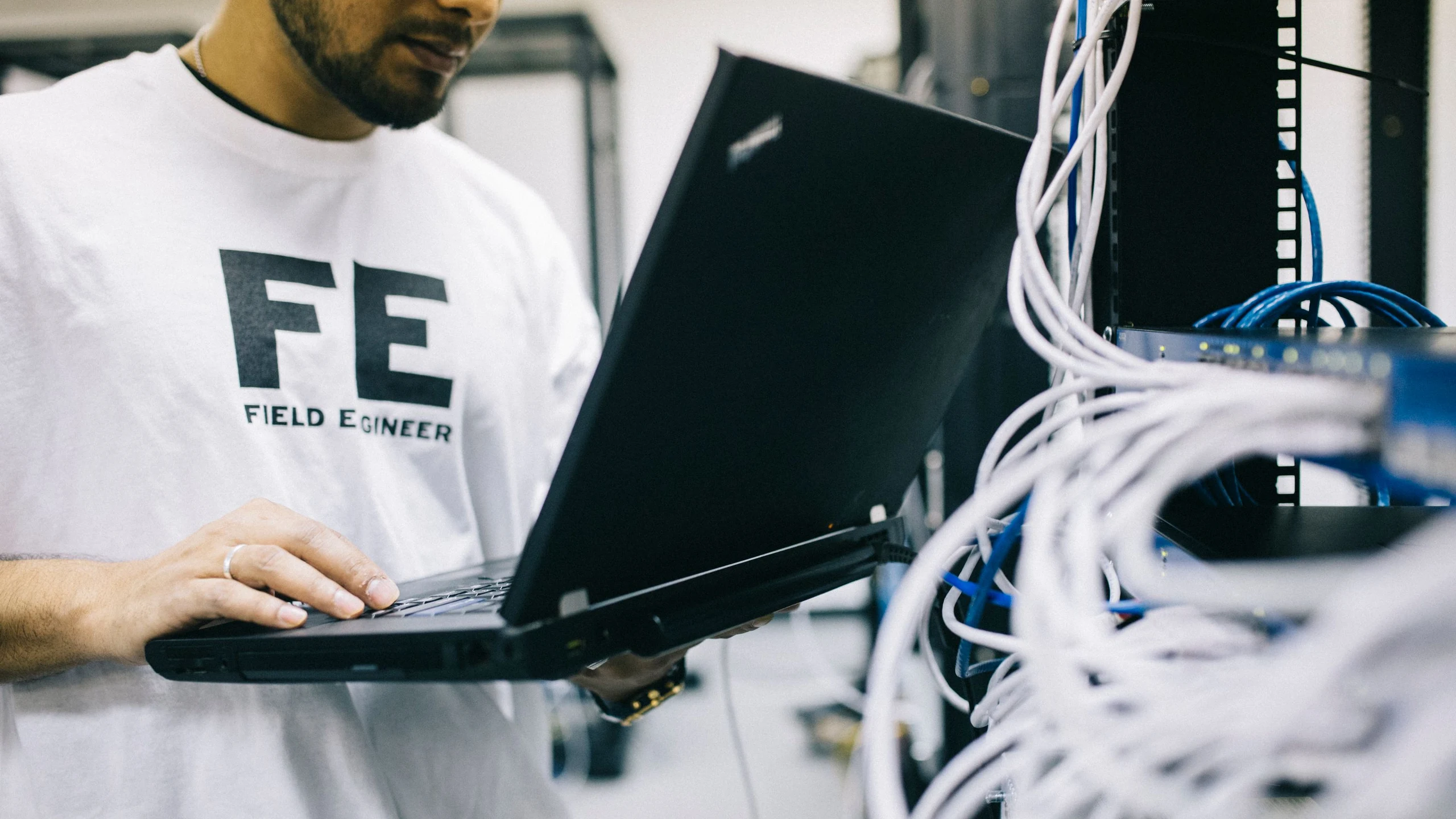
Engineer uses a laptop beside rack mounted network equipment with white and blue cables.
Aperture Physical AI Research Labs

Knowledge Learning and Deployment

An industrial AI prototype may work with one dataset and still be difficult to reuse on another machine. Equipment names, operating conditions, data definitions, and software versions can change. This program studies how dependable context, efficient learning, model monitoring, and reproducible evaluation can help turn prototypes into reusable industrial capability.

Knowledge Learning and Deployment

Preserve meaning as systems change

Deployment requires more than moving a model file. A temperature reading needs units, a timestamp, and an equipment reference. A prediction needs a known model version and a defined use. Without that context, technically valid data can support an unsuitable decision. The research question is how to preserve meaning and evaluate behavior across changing operational settings.

Research areas

Industrial Knowledge and Interoperability

Study how asset identities, maintenance records, operating limits, and sensor observations can be connected without losing their source or meaning. Interoperability means systems can exchange information and interpret it consistently. Candidate work includes shared vocabularies, unit mappings, versioned schemas, and traceable links between records. Conflicting definitions should remain visible for review rather than being silently merged.

Model Monitoring and Adaptation

Investigate how models can learn from limited industrial data and how their behavior changes after release. Drift is a change in data or relationships that may affect performance; it does not automatically prove a model has failed. Research could compare transfer learning, targeted labeling, and reviewed retraining while preserving independent evaluation data. An alert should trigger investigation, with any model update evaluated before approval.

Reusable Engine Interfaces

Examine interfaces that let Identification, Sensing, AI Decision, and Physical AI Action engines exchange context consistently. Candidate interface fields include timestamps, uncertainty, data versions, permitted commands, and outcome feedback. Reuse also requires compatibility checks, reproducible configurations, and release records. A common interface does not establish that a model or action is suitable for every machine.

Methods and evaluation

Compare releases under defined conditions

A proposed evaluation would retain versioned data, code, configurations, and baseline models. Split data by machine, time, or site where appropriate to limit leakage from related observations. Use replay and isolated tests before a supervised pilot where justified. Compare unchanged and adapted models on the same independent cases, then document failures, review decisions, and rollback conditions.

Candidate evaluation measures

Measures may include prediction error, labeling effort, mapping errors, time to detect performance degradation, false alerts, release reproducibility, and rollback time. Define each measure for the intended task and report sample scope and uncertainty. Assess operator usefulness and economic value separately from model accuracy, including integration and review effort. Numerical thresholds require agreement for the intended setting.

Current stage and program boundaries

Research agenda

Current stage

This overview describes a research agenda. Project records should establish whether work is proposed, in progress, demonstrated in a defined testbed, evaluated in a supervised pilot, or deployed for a defined use. No completed experiments, production releases, or measured savings are reported here.

Program boundaries

The program owns semantic integration, the learning lifecycle, release processes, and deployment value evidence. Domain programs retain ownership of their scientific models and applications. Malicious compromise belongs to Security and Trusted Industrial AI.

NIST AI RMF provides background on managing risk across AI development and use; citing it does not establish certification.

Knowledge Learning and Deployment

Discuss a learning or deployment challenge

Explore detailed research at Aperture Learning Labs. For a potential collaboration, describe the equipment, available observations, current model or workflow, reuse barriers, and outcome to evaluate. Begin with a nonconfidential summary.

All Research Programs
Scroll to Top