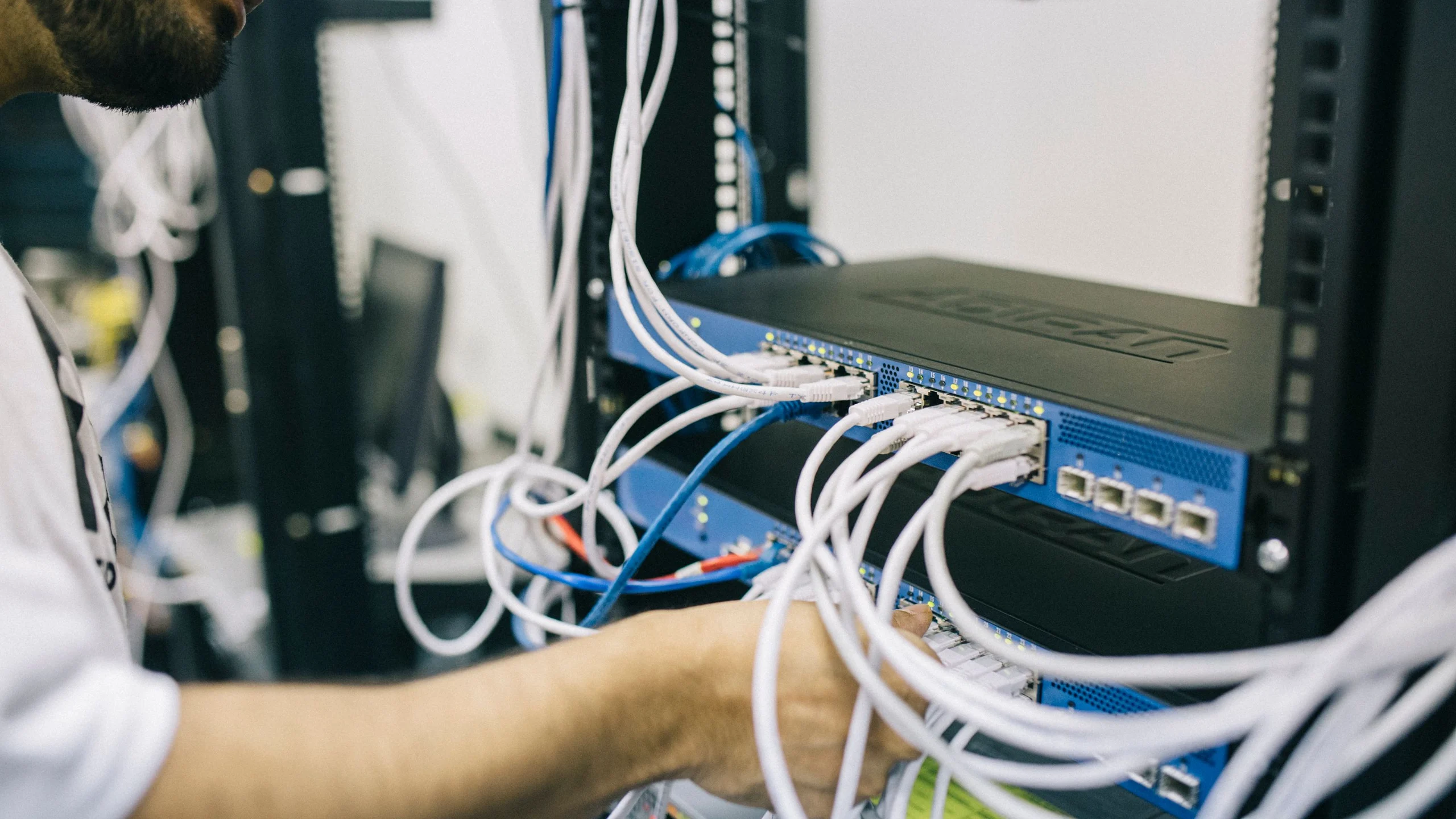
Technician checks Ethernet connections on rack mounted network equipment with white and blue cables.

Security and Trusted Industrial AI

Industrial AI can be affected by compromised observations, manipulated context, and unauthorized commands. This program studies adversarial threats and security controls across the path from sensing to physical action. It considers integrity, privacy, resilience, and recovery while examining the consequences for the equipment, people, and processes involved.

Connect Security Events to Physical Consequences

A plausible reading may be maliciously altered, and a request that resembles normal traffic may exceed its sender’s authority. Security research must examine what an adversary can influence, which trust boundaries are crossed, and how the physical process could be affected. NIST operational technology guidance addresses security alongside performance, reliability, and safety requirements.

Consider a proposed study of an industrial agent receiving a replayed condition report and a request to change an equipment setting. An isolated test could evaluate freshness checks, source verification, command authorization, and recovery to a known configuration. Independent observations would establish whether an unauthorized change occurred. This is a research illustration, not a reported attack or a demonstrated Aperture defense.

Research Areas

Sensor Integrity and Spoofing Resistance

Investigate deliberate manipulation of observations, including false identity, replayed reports, and altered measurements. Questions include how source identity, timing, provenance, and independent evidence can expose inconsistent or untrusted input. A message from an authenticated device may still contain an incorrect physical observation, so message integrity and measurement validity require distinct evidence.

Secure AI Agents and Commands

Examine permissions, tool access, untrusted context, and command interfaces for industrial agents. Research questions include limiting authority to a defined task, checking command preconditions, and maintaining records of who requested, approved, and executed an action. Requests should be evaluated at the execution boundary; an agent’s recommendation alone is not authorization to alter equipment.

Resilience and Recovery

Study how systems contain compromise, preserve useful evidence, and restore a defined operating state. Candidate questions include isolation of affected components, trusted configuration recovery, and checks before commands resume. Privacy research also considers what industrial observations reveal about people or operations and which access, retention, or sharing limits are appropriate. Recovery must be assessed through behavior, not inferred from a restarted service.

Methods and Evaluation

Define the threat and permitted test conditions

A proposed evaluation would state the protected assets, adversary capabilities, trust boundaries, baseline controls, and permitted scenarios. Replay or simulation could support repeatable comparisons before isolated physical tests where approved. Keep security event records and independent physical observations aligned. Evaluate ordinary faults separately so a detected anomaly is not automatically classified as an attack.

Candidate evaluation measures

Measures may include attack detection rate, false alarms, time to containment, unauthorized commands accepted or blocked, residual physical deviation, and recovery time. Report scenario coverage, sample scope, uncertainty, and control overhead. A successful test against one threat model does not establish protection against every adversary. Numerical thresholds and test permissions require technical approval for the intended setting.

Current Stage and Research Limits

This overview presents a research agenda. It does not report completed security experiments, deployed defenses, independent audits, or certification. Approved project records should identify dated status, threat assumptions, methods, setup, findings, limitations, and next steps. No claim of universal security, privacy compliance, or guaranteed recovery is made.

The program owns adversarial threat models and security controls. General assurance, sensor reliability without an adversary, and routine model lifecycle operations remain separate responsibilities. Security and human oversight apply across the network; they are not additional Aperture engines.

Explore Specialist Research or Discuss a Security Question

Visit Aperture Security Labs for detailed program research. To discuss a challenge, describe the physical process, observations and command interfaces, relevant threat assumptions, operating constraints, and outcome to evaluate. Begin with a nonconfidential summary rather than credentials, vulnerabilities, or sensitive system details.

All Research Programs
Scroll to Top