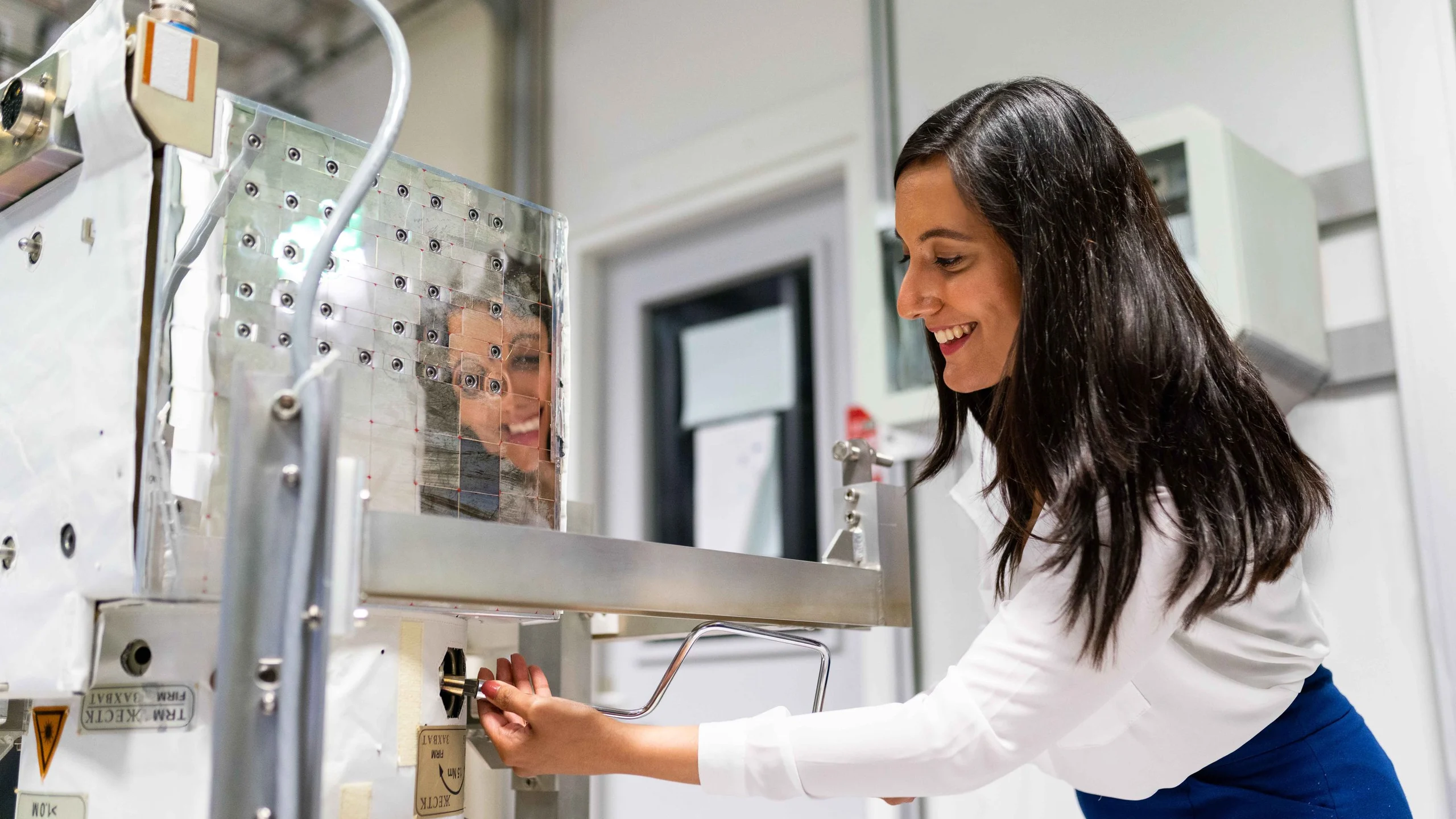
Engineer beside an instrumented equipment assembly in a workshop illustrating diagnostics research.

Equipment Health and Quality

Equipment deterioration and production defects can appear through several imperfect signals. This program investigates how those signals can support diagnostic conclusions, explain likely causes, and inform maintenance and quality decisions. It connects asset condition with product and process evidence while keeping uncertainty and the limits of each conclusion visible.

Understand What Changed and Why It Matters

An unusual vibration, a warmer component, or a rejected part may indicate a developing problem, a changed operating condition, or an unrelated disturbance. Detecting a difference is a starting point. A useful diagnostic assessment must examine whether the evidence supports a fault, which explanations remain plausible, and what further inspection could resolve the uncertainty.

Consider a proposed study of a machining process producing intermittent surface defects. Vibration records, inspection images, operating settings, and maintenance history could be compared to investigate whether changes follow tool deterioration or another cause. The study would need independent inspection evidence and controlled comparisons. This example illustrates a research question, not a completed Aperture experiment.

Research Areas

Predictive Maintenance and Diagnostics

Investigate indicators of deterioration, fault identification, and estimates of future equipment condition. Condition monitoring describes observed behavior; diagnostics examines likely faults; prognostics estimates how condition may develop. NIST research treats these as connected capabilities supporting manufacturing maintenance. Research questions include limited failure examples, changing loads, and whether an alert provides useful time for an appropriate maintenance response.

Multimodal Inspection

Study how images, thermal observations, acoustic signals, vibration, and operating records can contribute complementary evidence. Different sources may reveal different defects, disagree, or become unavailable. Proposed methods should be compared with individual-source baselines and tested under defined inspection conditions, including changes in lighting, viewing position, load, and background noise where relevant.

Quality Prediction and Root Causes

Examine relationships between equipment condition, process settings, materials, and measured quality. A prediction of rejection risk differs from a demonstrated explanation of why defects occur. The research scope includes confounding factors, traceable inspection labels, and evidence needed to distinguish competing causes. Associations can guide investigation, but should not be presented as proof of causation.

Methods and Evaluation

Compare findings with independent evidence

A proposed evaluation would define the equipment, fault or defect categories, baseline, and reference evidence before analysis. Maintenance findings, independent measurements, or qualified inspection could provide reference labels, with uncertainty documented. Tests should separate training from evaluation by suitable time periods, machines, or production batches and retain missed faults, false alarms, and unresolved cases.

Candidate evaluation measures

Measures may include fault detection recall, false alarms per operating period, defect classification precision, missed defects, warning lead time, and prediction error. Time-to-failure estimates require uncertainty and suitable follow-up evidence. Operator usefulness and economic value need separate evaluation, including investigation workload and the consequences of incorrect decisions. Numerical targets require approval for the intended task.

Current Stage and Research Limits

This overview describes the program’s research agenda. It does not report a completed experiment, demonstrated testbed, supervised pilot, or deployed capability. Approved project records should identify dated status, methods, setup, findings, limitations, and next steps. No performance figures or maintenance savings are asserted here.

The program owns asset diagnostics and quality inference. It can provide evidence for a decision, but measurement validity, process intervention, and the behavior of mobile inspection platforms remain distinct responsibilities.

Explore Specialist Research or Discuss a Challenge

Visit Aperture Equipment Diagnostics Labs for detailed program research. To discuss a challenge, describe the equipment or process, suspected deterioration or defect, observations available, inspection or maintenance evidence, and outcome you need to evaluate. Begin with a nonconfidential summary.

All Research Programs
Scroll to Top