
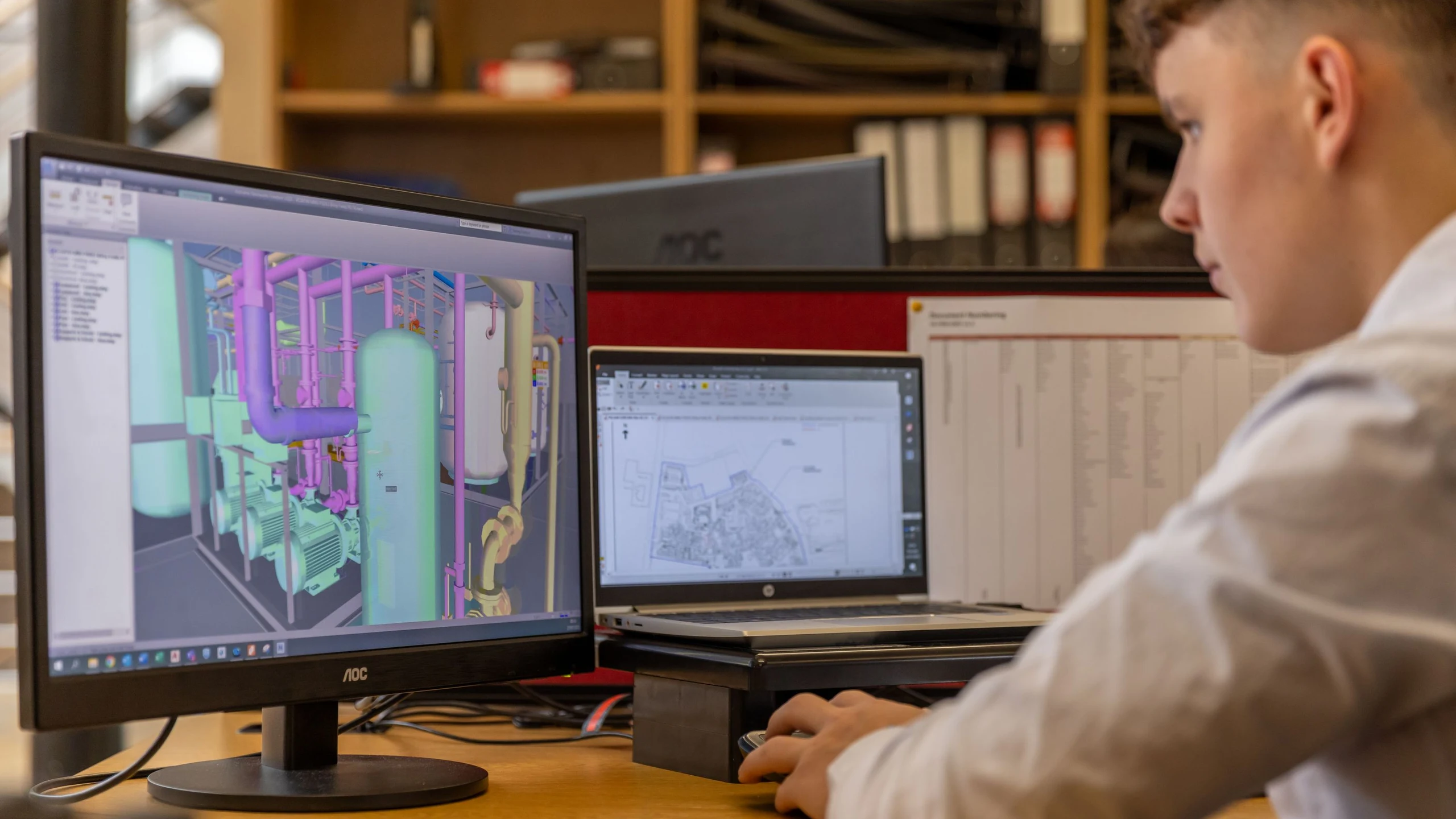
Engineer examines a three dimensional plant model and technical drawings on computer screens at a desk.

Digital First Testing

Digital experiments help researchers examine an industrial AI method before introducing it to physical equipment. They can make comparisons repeatable, expose missing assumptions, and identify conditions that need closer investigation. Their usefulness depends on what the digital setup represents and what it leaves out.

Digital first does not mean digital only. Recorded data, synthetic cases, and simulated responses are different forms of evidence. Physical evaluation is needed to assess how a method behaves with real instruments, timing, communications, and equipment. The workflow below is a research method, not a claim that Aperture has completed these tests.

Choose The Experiment For The Question

Recorded data replay

Replay runs a method against previously collected observations. It can compare estimators or diagnostic methods on a common sequence and reveal how they handle gaps, noise, or delayed messages. Retain the original timing and provenance, and state whether the sequence was altered for a test.

Replay cannot establish the physical effect of a new command when that command would have changed later observations. A controller evaluated on a fixed historical sequence may appear effective because the sequence ignores its actions. Questions about response usually need an interactive model followed by physical evidence.

Synthetic data

Synthetic cases can cover a defined scenario that is rare or missing in available records, such as a message arriving out of order. State how each case was generated and which assumptions it represents. Artificial examples do not establish the frequency of real events or replace independent measurements of equipment behavior.

Calibrated simulation

A simulation models how a process evolves under inputs and disturbances. Calibration adjusts its parameters using reference data. Validate the model against separate observations where feasible, and report the range over which its behavior agrees with the reference. A detailed visual model can still have an unsuitable dynamic response.

Operational digital twins

A digital twin connects a representation to a particular physical system and its operational information. Define the link, update frequency, state variables, and intended decision. A static model or attractive rendering should not be presented as a synchronized twin. NIST research on digital-twin credibility emphasizes verification, validation, and uncertainty assessment for the intended purpose.

Test Software and Interfaces Before Integration

Software in the loop

Software in the loop testing runs the candidate software against a simulated environment. It can check decision logic, data handling, constraints, and response to defined disturbances. Record software versions, model settings, random seeds where relevant, and the exact inputs so comparisons can be repeated.

Hardware in the loop

Hardware in the loop connects a real controller or computing device to a simulated process through specified interfaces. It can reveal timing, communication, and interface behavior missed by a software-only setup. State which hardware is real, which process elements are simulated, and how the simulated clock relates to the device clock.

Keep the tested boundary explicit

A real controller connected to a simulated pump is not a physical pump trial. A software test with realistic messages is not hardware in the loop unless actual hardware participates in the defined loop. Describe the setup precisely so readers can assess what the evidence supports.

A Proposed Cooling System Study

Consider a proposed study of a cooling loop with a variable-speed pump. The question could be whether a candidate policy maintains agreed temperature limits while using less energy than the existing controller under matched demand. Define the equipment boundary, measurements, baseline, and permitted commands before choosing a test sequence.

Begin by replaying recorded temperature, flow, and operating-state observations to check preprocessing and state estimation. Use a calibrated dynamic model to evaluate commands that alter flow and temperature. Introduce documented variations in demand, sensor timing, and model parameters. Compare the candidate with the baseline using the same scenario set.

A software in the loop test could examine the policy logic. A hardware in the loop test could then examine the target controller’s timing and interfaces against the simulated cooling process. Neither stage demonstrates performance on a physical cooling installation. This sequence is an illustrative research design, not an Aperture test report.

Treat Model Mismatch As A Research Finding

A model may omit valve friction, heat-transfer changes, actuator saturation, communication delays, or an operating regime absent from calibration data. Examine sensitivity to plausible variations rather than presenting one favorable run as representative. Report where a policy fails and where the model is too uncertain to support a conclusion.

Keep test cases independent from the cases used to tune the method where feasible. Avoid changing the simulator simply to improve the candidate’s score. If simulated and measured responses disagree, investigate the instruments and assumptions, then document any model revision before repeating the comparison.

Connect Digital Results To Physical Validation

Before a physical trial, agree permissions, instrumentation, supervision, operating limits, and stop conditions with the responsible equipment owner. Begin within the approved scope and compare measured response with the digital prediction and baseline. Use independent references for the outcomes being assessed.

Candidate measures include tracking error, time outside stated limits, energy per delivered cooling service, response delay, constraint violations, and intervention frequency. Define the units, sample scope, and uncertainty. Report simulated and physically measured values separately. Digital evidence can prioritize tests, but it does not establish deployment readiness on its own.

Explore The Supporting Research

Digital Twins and Simulation owns model fidelity, simulation environments, and transfer evidence. AI Decisions and Control owns the policies evaluated within those environments. Shared evaluation methods connect both programs to the research lifecycle.

Define A Digital Experiment

Describe the physical process, available recordings or model, intended decision, uncertain behavior, and planned physical reference. Begin with a nonconfidential summary.

Scroll to Top