
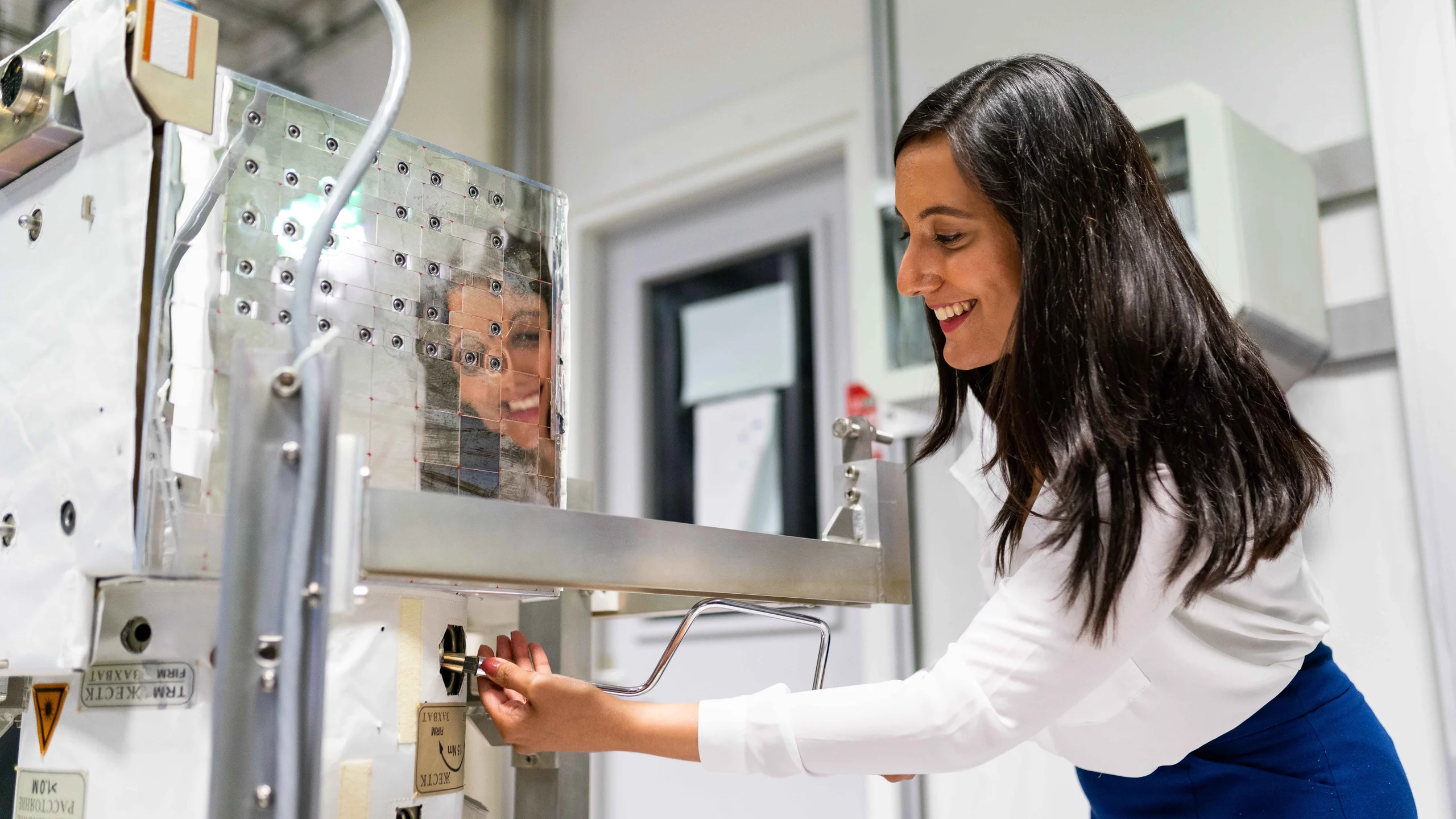
An engineer positions a device near a microphone in an acoustic room lined with sound absorbing wedges.

Learning with Limited Industrial Data

Limited industrial data can mean few independent events, incomplete coverage of operating conditions, uncertain labels, or restricted access to observations. A dataset may contain millions of rows while representing only a small number of machines or physical episodes. Learning should be framed around those evidence limits rather than the storage size alone.

The practical question is which method can answer a useful industrial question with the observations available and what additional evidence would most improve that answer. A simpler model, a narrower task, or better measurement may be more informative than a more complex method trained on the same sparse events.

A Rotating Equipment Example

Consider a proposed study using vibration and operating context to identify cases that warrant inspection of rotating equipment. The team has many ordinary operating records but few independently confirmed fault episodes. Maintenance notes describe some symptoms, while other events lack a definite cause.

The study could compare a simple operating baseline with a learned method for prioritizing review. It should not assume that every unreported interval represents healthy equipment. This example is a research design, not an Aperture diagnostic result or a claim that a particular signal pattern proves a fault.

Count The Units That Support The Claim

Rows and independent episodes

Adjacent windows from the same vibration recording share context and may be strongly related. Repeating them across development and evaluation can make the method appear to generalize while it recognizes a familiar episode. Record the machines, events, time periods, and operating regimes represented by the observations.

Coverage of conditions

Normal load variation, startup, maintenance, and equipment configuration can change the observations. A model evaluated only at one operating condition has a narrower evidence base than the row count suggests. Describe which conditions are absent and whether the task can be bounded to the observed range.

Rare events remain rare after duplication

Oversampling can change the balance of training records, but it does not create new independent fault episodes. Keep the number and identity of underlying events visible. Evaluation should retain a meaningful relationship to the intended task rather than treating repeated copies as additional field evidence.

Establish What The Labels Mean

Separate a confirmed inspection finding from a maintenance action, symptom report, or model generated label. A replaced component does not necessarily establish the cause of an earlier signal. Retain effective times and the association between observations and the physical event being used as a reference.

Represent uncertain and unresolved cases explicitly. They may support a different learning arrangement or require additional review, but they should not silently become negative examples. Review labels with the appropriate domain expert and record changes so later evaluation can distinguish a better reference from a changed model.

Begin With An Interpretable Baseline

A threshold, operating regime comparison, or simple statistical model can reveal how much of the task is already explained by known variation. Compare a candidate method with that baseline under the same information and cases. More model capacity adds flexibility but can also fit incidental differences in a small dataset.

Use engineering knowledge to define quantities, plausible features, and useful task boundaries. Expert input should be documented as an assumption or rule that can be examined. It is not a substitute for independent outcome evidence, and a plausible feature still needs evaluation under the relevant physical conditions.

Choose A Learning Approach That Fits The Evidence

Existing representations or pretrained models may reduce the amount of task specific fitting needed. Their suitability depends on the observations and conditions they represent. State what is reused, what is fitted locally, and which target information is used during development so the transfer claim remains clear.

Methods using unlabeled observations can help characterize variation, but an unusual pattern is not automatically a fault. Simulated or augmented records can examine sensitivity to selected changes without establishing that those changes capture actual failure behavior. Keep synthetic examples separate from independently observed physical events in reporting.

Protect The Evaluation From Leakage

Choose splits that reflect the claim. A comparison on a later period, an unseen machine, or another site asks different questions. Keep related episodes together where necessary and preserve time order when future prediction is the task. A random row split may not provide the intended independence.

Fit preprocessing and select features using only the appropriate development records. If scaling, imputation, or feature selection uses the reserved evaluation data, information can influence the method before the test. Record development choices and avoid repeatedly treating an examined test set as unseen evidence.

Use New Collection Deliberately

Inspect the cases where the baseline and candidate disagree or where evidence is weak. A planned collection could target an underrepresented operating regime, improve an equipment association, or obtain an independent inspection reference. State the question that the new observations are intended to resolve before adding more routine rows.

If examples are selected because a method finds them interesting, retain that selection process. Those cases may be valuable for learning while being unrepresentative of ordinary task frequency. A later evaluation needs to account for the difference between targeted collection and the population where the method will be used.

Report Uncertainty Instead Of Unsupported Precision


Evaluate at the level relevant to the task, including independent events, machines, unresolved cases, and operator review. With few confirmed episodes, uncertainty can remain substantial even when the observed score is high. Report counts and conditions alongside aggregate measures so readers can assess that limitation.

The result may justify a narrower study, a useful review aid, or additional evidence collection rather than deployment. A sound limited data study makes the missing evidence visible and explains which next observation would change the decision.

Scroll to Top