
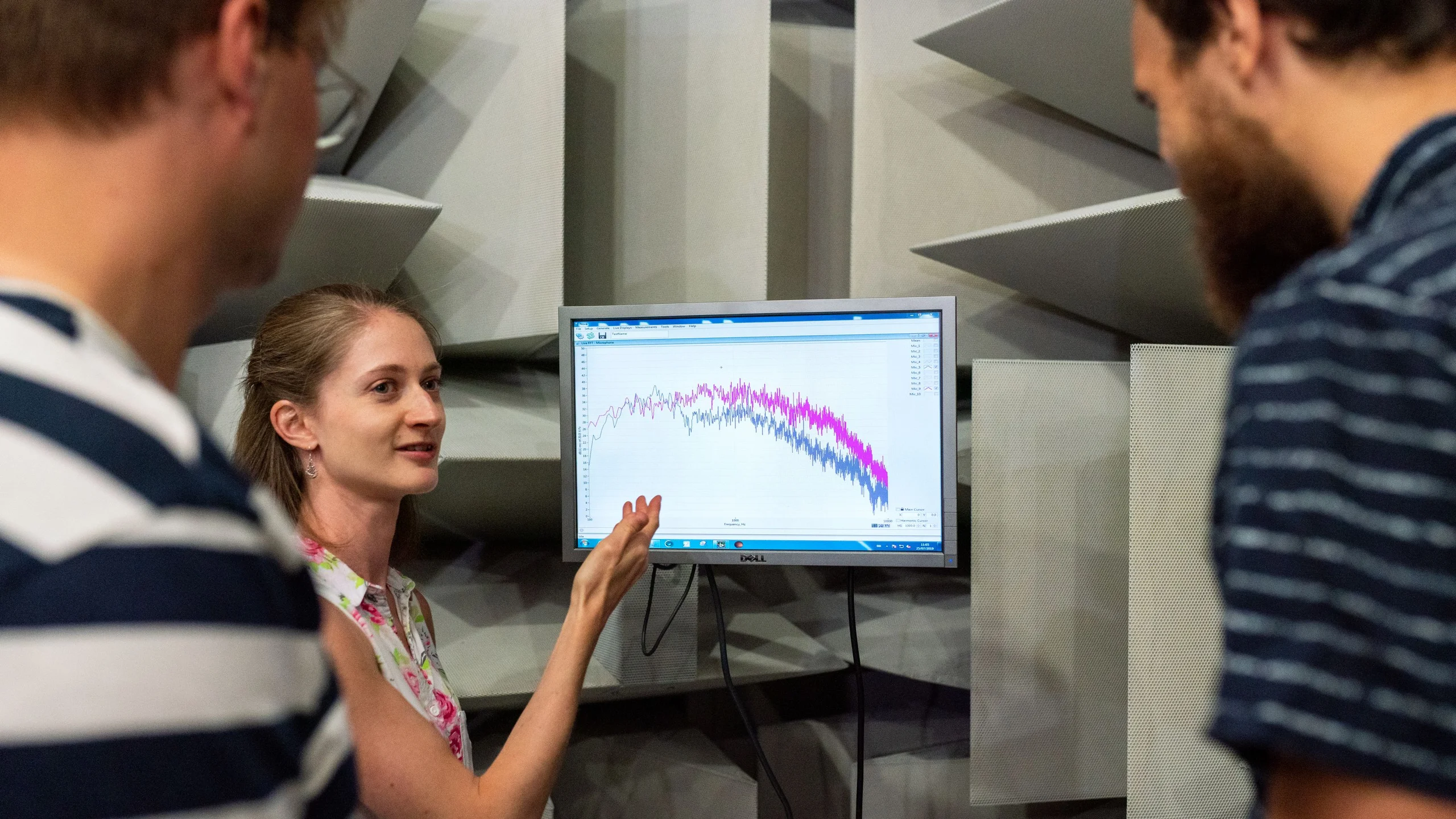
Three engineers discuss plotted measurements on a monitor inside an acoustic testing workspace.

Research Outputs

Research outputs make a study available for closer examination. They can explain a method, document an evaluation, preserve a dataset, or define a benchmark protocol. A useful output tells readers what was done, what the evidence supports, and which conditions remain unresolved.

This directory organizes reports, publications, datasets, and benchmarks associated with Aperture research. Each output record identifies its authors, date, version, resource type, and access conditions. Links to related projects and demonstrations provide context without replacing the methods and evidence in the resource itself.

Reports and Publications

Reports and publications explain research questions, methods, and findings in a form that readers can inspect and cite. Records distinguish technical reports, preprints, conference papers, journal articles, and other approved publication types. A document should be described by its actual review and publication status.

Read the method, comparison, reference evidence, and limitations alongside the summary. A result from a defined testbed should retain that setting in its description. Where a report introduces a proposed method without completed evaluation, its record should make that boundary clear.

Datasets and Benchmarks

Datasets provide observations or annotations under stated collection and access conditions. Benchmarks define a task and an evaluation procedure. A resource may contain both, but a collection of files does not become a benchmark merely because a model has been run against it.

Resource records explain provenance, scope, fields, quality limits, splits, permitted uses, and version history. Benchmark records additionally identify the reference evidence, scoring procedure, baseline, and reporting requirements. These details help readers judge whether the resource fits their physical system and evaluation question.

Find An Output

Use the output type and research program to locate relevant work. The date and version help distinguish an original release from an updated resource. Where access is restricted, the record should explain the route for requesting access without implying that approval is automatic.

No research output records are available in this section yet. Explore our research approach or discuss a research question with us.

Read The Record Before Using The Resource

Methods findings and limitations

Check which equipment, sites, operating conditions, and versions were examined. Separate measured results from estimates and simulated results from physical observations. Conclusions should be interpreted with the baseline, sample scope, uncertainty, and unsuccessful cases that accompany them.

Version and access

Use the version identified in the record when reproducing a result or citing a resource. Later corrections can change labels, data splits, methods, or conclusions. Access may be open, restricted, request-based, or external; the license and permission conditions remain specific to the resource.

Citation and revision history

Retain the author list, title, release or publication date, version, and stable identifier where one exists. A revision note should explain material changes. A withdrawn or superseded resource should be labeled so readers can find the appropriate replacement without losing the history of earlier work.

Connect Outputs To The Research Question

A project record explains why a study was undertaken and which programs participated. A demonstration shows a defined setup or behavior. The output provides the detailed methods, findings, or resource access needed for deeper inspection. These records serve different purposes and should link to one another when the relationship is established.

Discuss A Resource Or Research Question

For a question about an output, identify its title and version and explain your intended use. For a proposed collaboration, describe the physical problem, available observations, constraints, and outcome to evaluate. Begin with a nonconfidential summary.

Scroll to Top