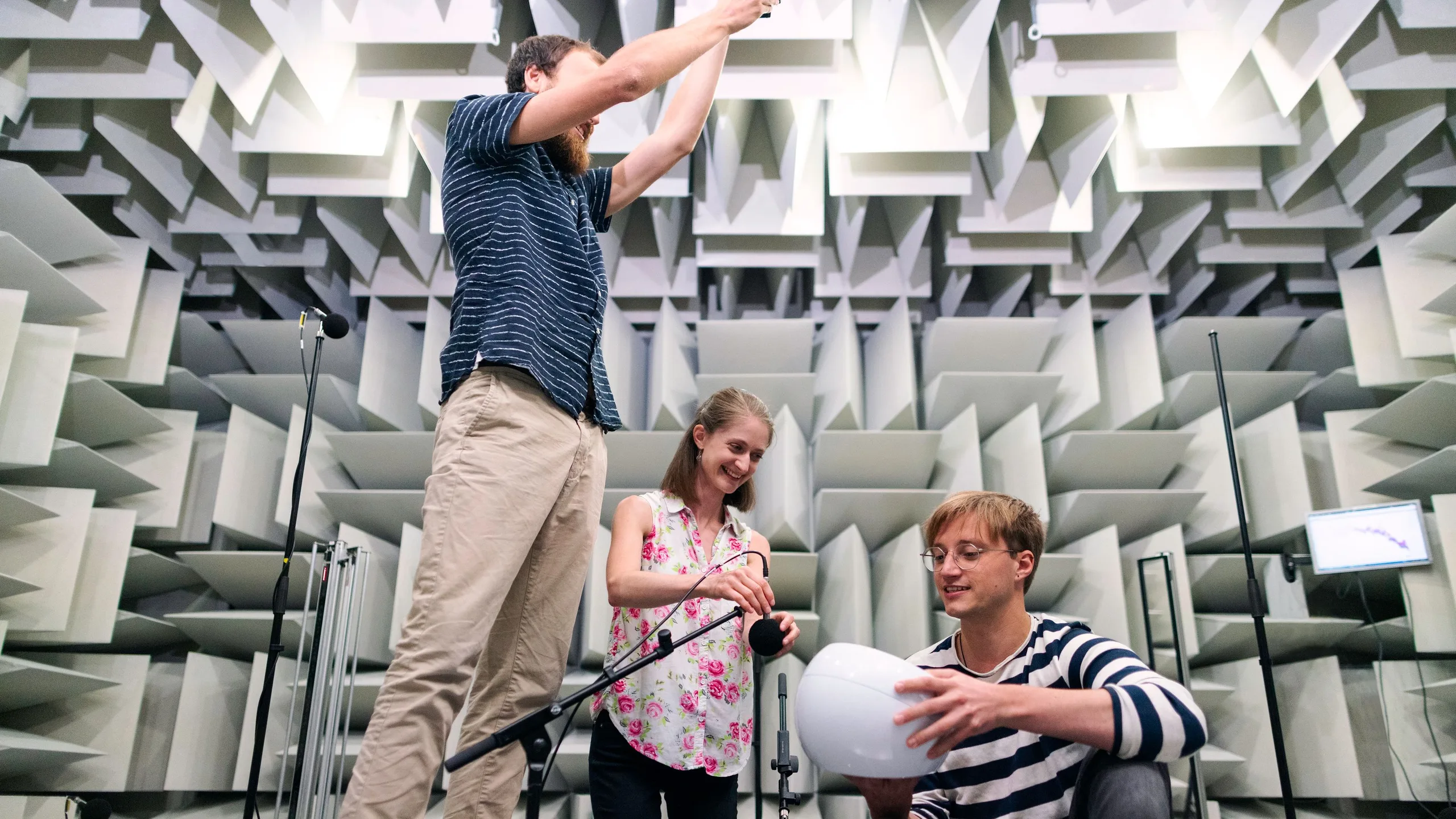
Three engineers arrange measurement equipment inside an acoustic chamber with sound absorbing walls.

Demonstrations

A demonstration makes a research method easier to inspect by showing a defined behavior in a particular setup. It may illustrate how observations are interpreted, how a decision reaches an interface, or how a physical system responds. Understanding that example requires the conditions around it, not just the visible result.

This section presents demonstrations with a dated record, a description of the setup, and an explanation of what the material can establish. Simulation, recorded physical testing, live demonstrations, and supervised pilots are identified separately. A demonstration is not, by itself, evidence of general deployment readiness.

Browse Demonstration Records

Use the evidence setting and participating program to find an example relevant to your question. Each record connects the recording to the underlying project where one exists, and to supporting reports or evaluation resources where they are available.

No demonstration records are available in this section yet. Explore our research approach or discuss a research question with us.

Know What You are Watching

Simulation

A simulated demonstration shows behavior within a digital environment. Its record identifies the model, relevant assumptions, and which components are simulated. An animated machine response should not be described as a physical measurement.

Recorded physical testing

A physical recording shows equipment at the time the material was captured. The record should describe the instruments, conditions, supervision, and configuration. Distinguish a selected recording from the broader set of trials used to evaluate the method.

Live demonstration and supervised pilot

A live demonstration concerns a specified session and setup. A recording of that session remains a recording. A supervised pilot is a bounded operational trial with defined responsibilities and evaluation criteria. Neither label should imply unrestricted autonomy or performance outside the stated conditions.

Identify mixed setups

Some examples connect real hardware to a simulated process or combine prerecorded inputs with live software. The record identifies those boundaries so readers know which timing, interfaces, and physical responses were actually exercised.

Inspect The Setup and Configuration

Read the purpose, equipment boundary, input sources, software versions, and relevant settings before interpreting the sequence. The record explains any preparation, calibration, resets, or manual assistance needed to produce the visible behavior. It also identifies material editing, acceleration, or omitted intervals.

For an action example, distinguish the requested command, the interface response, and the observed physical outcome. A displayed acceptance message establishes what the interface reported; independent measurements are needed for claims about the equipment or process.

Read The Transcript and Observation Notes

A transcript should make narration and important events available in text. Timestamped notes can describe visible actions, manual interventions, and relevant state changes. Keep observation separate from interpretation so that readers can tell what the recording shows and what requires additional evidence.

Accessible captions and a text explanation help readers examine the demonstration without relying solely on audio or animation. Where an interface changes during the recording, explain the task and outcome rather than requiring a viewer to read small screen text.

Connect The Example To An Evaluation

A demonstration may explain a method without establishing comparative performance. Look for the baseline, reference measurements, sample scope, repeated runs, uncertainty, and failures in the associated evaluation. A single successful sequence does not describe the frequency of unsuccessful cases.

Limitations should identify untested conditions, dependencies on supervision, and any difference between the demonstration environment and the intended use. When the example motivates further work, describe that work as a next investigation rather than an achieved result.

Explore Related Work

Project records explain the broader research question. Research outputs provide methods, findings, and resource access. Read these records together when deciding whether an example addresses the equipment, conditions, and evidence needs of your own research challenge.

Discuss A Demonstration

Share the relevant record and a nonconfidential description of the behavior or evaluation question you want to examine. For a proposed study, describe the physical system, available observations, constraints, and intended outcome.

Scroll to Top