
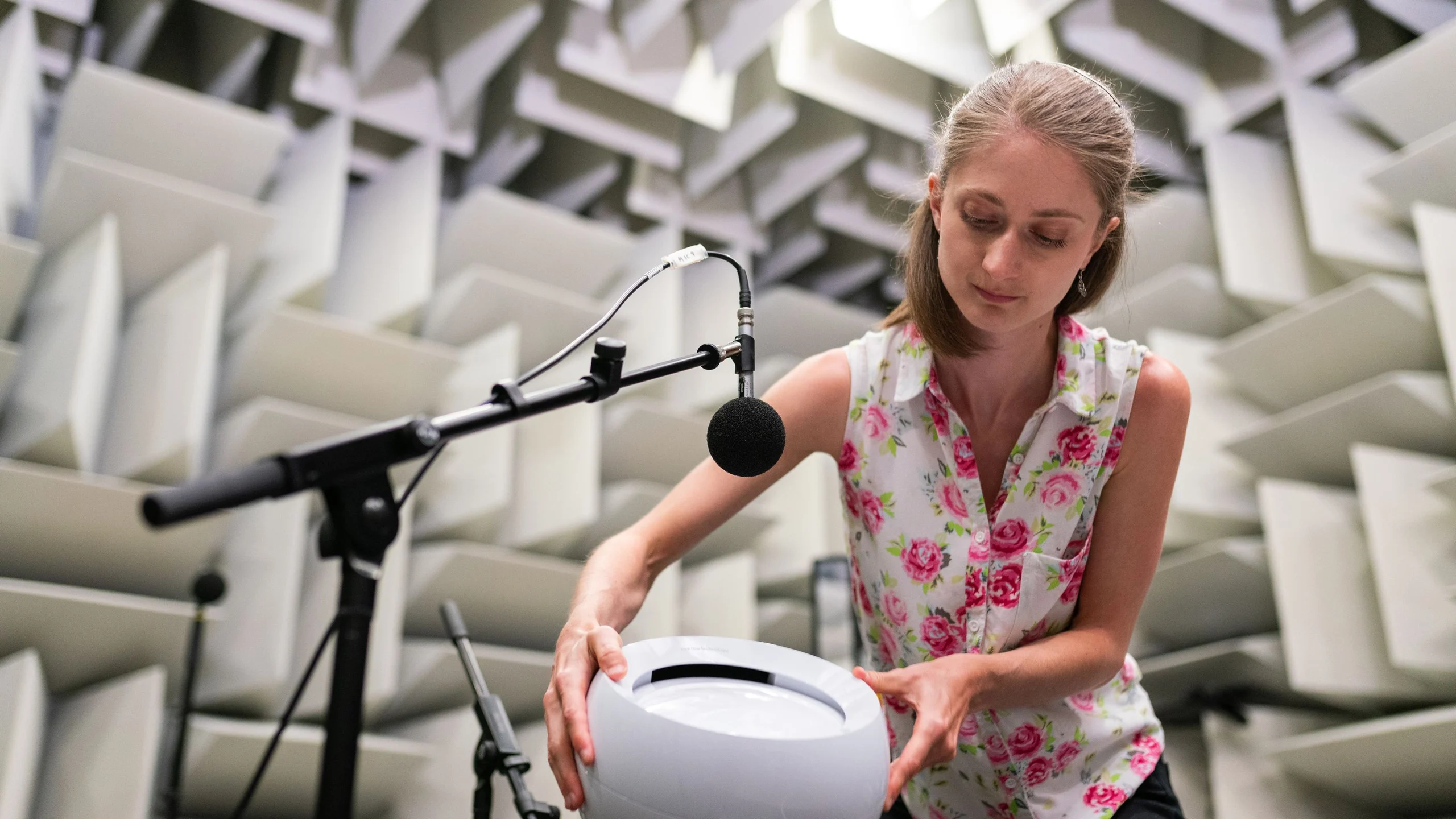
An engineer positions a device beneath a microphone in an acoustic test room lined with sound absorbing wedges.

Multimodal Observations

Multimodal observations describe a task using different kinds of evidence, such as an identifier read, an image, a weight measurement, or an acoustic recording. Each method observes a different aspect of the physical situation and has different limitations. Combining them can answer questions that one source leaves unresolved, provided the records describe the right objects and conditions.

The purpose is not to collect the largest possible number of signals. It is to establish which observations contribute useful evidence to a defined question. A larger input set can also introduce alignment errors, duplicated information, or dependencies that make a combined result harder to interpret.

A Packaging Inspection Example

Consider a proposed study at a packaging station where the task is to associate a container with an expected item and identify cases needing review. An RFID read could provide an identifier, a camera could show visible packaging, and a scale could measure total weight. Each observation contributes something different.

An identifier read does not establish that the intended contents are present. An image may not reveal an occluded label or an internal item. A weight measurement may distinguish some mismatches while leaving others unresolved. This is an illustrative research design, not a description of an Aperture installation or a completed inspection result.

Define The Contribution Of Each Source

Identity evidence

An identifier observation needs a documented association with the physical container or item. Nearby tags, duplicate records, label changes, or a reused identifier can complicate that relationship. A receiving method should distinguish a confirmed association from a candidate match rather than attach every nearby observation to one object.

Appearance and location

Camera evidence can describe visible features, position, or relationships within the view. Lighting, obstruction, viewpoint, and image timing affect what it can support. A model inference about an image is different from a direct observation of hidden contents and needs evaluation against an independent reference.

Physical measurements

A scale reading describes a quantity under defined measurement conditions. Container tare, settling time, vibration, instrument resolution, and units can affect interpretation. State which quantity is being compared and whether the measurement was made while the object was stationary or moving.

Associate Records Before Combining Them

The three sources may produce records at different rates and moments. Define how an identifier read, an image, and a scale interval are associated with the same container. Retain capture times, position or station references, and any ambiguity in that association.

If two containers are close together, a simple nearest-time rule may attach the wrong image or weight. The research should evaluate association failures independently of the later classification. A sophisticated combined model cannot reliably compensate for a training record that links evidence from different physical objects without exposing that error.

Align Time and Measurement Meaning

Distinguish capture time from processing and arrival time. Explain clock relationships, buffering, and any time windows used to match observations. A newly received camera result may concern a container that has already left the scale. Combining the latest message from each source does not necessarily create one current physical state.

Where position is involved, agree the coordinate frame and any transformation between sensors. Where quantities are involved, retain units and measurement location. Resampling or averaging can make records easier to combine while also hiding short events, gaps, or the age of a contribution.

Choose A Combination Method That Fits The Evidence

Combine observations or derived features

A method can combine aligned measurements directly or use features extracted from each source. Direct combination preserves detail but can depend strongly on timing and calibration. Feature-based approaches can simplify the input while losing information about how a feature was produced. Record the transformation and relevant versions.

Combine separate estimates

Another design allows each source to produce an estimate before those estimates are combined. This can help keep source-specific behavior visible, but the scores need defined meanings. Confidence values from different models are not automatically comparable, and agreement does not prove that their errors are independent.

Account for shared failure causes

Two estimates may rely on the same image, label source, or association rule. Treating them as independent confirmations can overstate the evidence. A common lighting problem or incorrect item mapping can affect several inputs at once. Evaluate those dependencies rather than assuming that more agreement always means less uncertainty.

Keep Disagreement and Missing Inputs Visible

If identity, appearance, and weight suggest different interpretations, preserve that disagreement for the receiving workflow. It may indicate a physical mismatch, a timing problem, an incorrect association, or a sensor issue. Forcing every case into a definite answer can conceal the condition the study needs to investigate.

Define behavior when a source is missing or invalid. Options might include a narrower estimate, another observation, or review under an existing procedure. A reduced-input mode needs its own evaluation; performance with every source available does not establish performance when one is absent.

Test Whether The Combination Helps

Compare the combined method with relevant single-source and simpler combined baselines under matched cases. Evaluate ordinary operation, ambiguous associations, source disagreement, and missing inputs. Test removing one source at a time to understand its contribution, while retaining cases that challenge shared dependencies.

Use independent evidence to establish the actual container, item, and review outcome. Separate development and evaluation cases by time, batch, or equipment where appropriate. Candidate measures include incorrect associations, missed mismatches, unnecessary reviews, processing delay, and unresolved cases. Report sample scope, uncertainty, and failures.

Connect The Result To The User Task


A combined estimate may improve a technical score while creating too many review cases or arriving after the packaging decision window. Evaluate whether the intended user receives enough context to investigate and resolve the case. Include integration and maintenance effort when considering value.

Document which sources, conditions, versions, and operating regimes were examined. The example explains how to frame a study; it does not establish that any particular sensor combination is suitable for a production station. Use observed findings to decide whether the next step is better association, another measurement, or a revised method.

Scroll to Top