
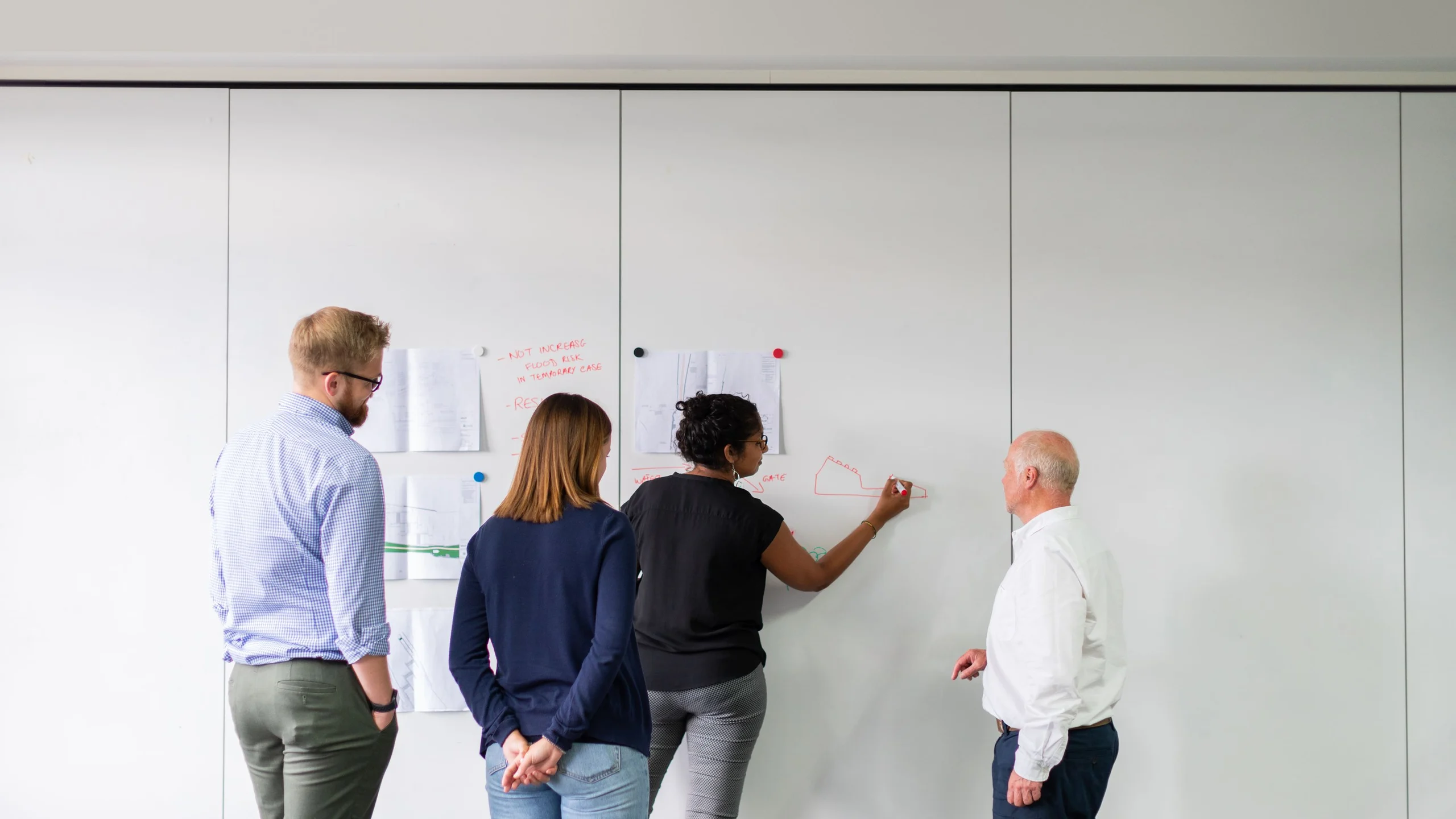
Four engineering colleagues discuss notes and a sketch at a whiteboard in a bright office workspace.

Decisions and Control

Industrial AI becomes a control question when a recommendation can influence equipment, material flow, or a physical process. The important questions concern the decision being made, the evidence available, the conditions under which a request is allowed, and how the resulting physical outcome will be established.

This category introduces four guides for technical leaders, researchers, controls engineers, and partners framing a bounded study. They explain how agents organize work, how constraints restrict choices, how feedback changes a plan, and how AI can fit around existing controllers. Each guide keeps the proposed method separate from authority to operate equipment.

Explore The Four Guides

Industrial AI Agents

An industrial agent can combine observations, planning, and software tools to advance a defined task. The guide uses a maintenance coordination example to distinguish retrieving information, proposing work, creating a request, and confirming what actually happened. It explains when a fixed workflow may be more appropriate and how to evaluate the added value of an agent.

Constraints and Command Preconditions

A desirable outcome does not make every path to it acceptable. Learn how planning constraints differ from conditions checked before a particular command is accepted. A transfer station example examines fresh state, equipment identity, operating mode, authority, and a change that occurs between checking and execution.

Planning with Outcome Feedback

A plan needs evidence about what its previous step achieved. This guide follows a replenishment task whose destination becomes unavailable. It separates a request acknowledgment from observed completion and explains bounded replanning, unresolved outcomes, and why revising a plan is different from changing a learned model.

AI and Existing Control Systems

AI can provide analysis or supervisory proposals while established controllers retain defined equipment responsibilities. A process temperature example explains information interfaces, timing, operating modes, and controlled progression from historical evaluation to a limited experiment. The guide distinguishes integration from replacing a control or protective function.

Start With The Physical Decision

Write down who needs the decision, what could change in the physical setting, and which evidence would show a useful result. A maintenance priority, a production sequence, and a motor command operate at different levels. Give each its own scope, responsible owner, and evaluation method rather than calling the entire workflow one autonomous system.

Define a relevant comparison. A scheduling rule, existing operator procedure, or fixed software workflow may already solve much of the problem. Compare the proposed method under matched conditions, including its unresolved cases and review burden. Improvements in a planning score should be connected to the actual user task before they are presented as operational value.

Keep Evidence and Authority Distinct

Information needed for a decision

Retain asset identity, observation time, operating context, quality limits, and relevant versions. A plausible estimate may still concern the wrong machine or an earlier condition. Explain how missing or contradictory evidence affects the receiving workflow instead of silently substituting a definite state.

A proposal is not execution permission

The ability to generate a command does not establish permission to send or carry it out. Define which component accepts requests, checks current conditions, and records the outcome. Human approval, where required by the study, applies to a particular proposal and context; a changed proposal needs handling under the agreed rules.

Preserve Research Boundaries

AI Decisions and Control addresses planning, bounded decisions, and process intervention research. Identification and Sensing supplies measurement and state evidence. Equipment Health and Quality addresses diagnostic and quality inference. Assurance, security, and human oversight contribute requirements across the workflow; they are not substitutes for the controller’s assigned responsibilities.

The examples in these guides are study designs rather than reports of installed Aperture systems. Simulation can reveal logic problems, while physical evaluation adds timing, equipment behavior, and operating context that a model may omit. Describe the conditions examined and the limits remaining before extending a method to another process.

Choose A Starting Point


Read Industrial AI Agents when you need to organize a sequence of information and tool interactions. Start with Constraints and Command Preconditions when a proposed request must be tied to current conditions. Use Planning with Outcome Feedback for changing tasks, and AI and Existing Control Systems for integration questions involving an existing plant interface.

Scroll to Top