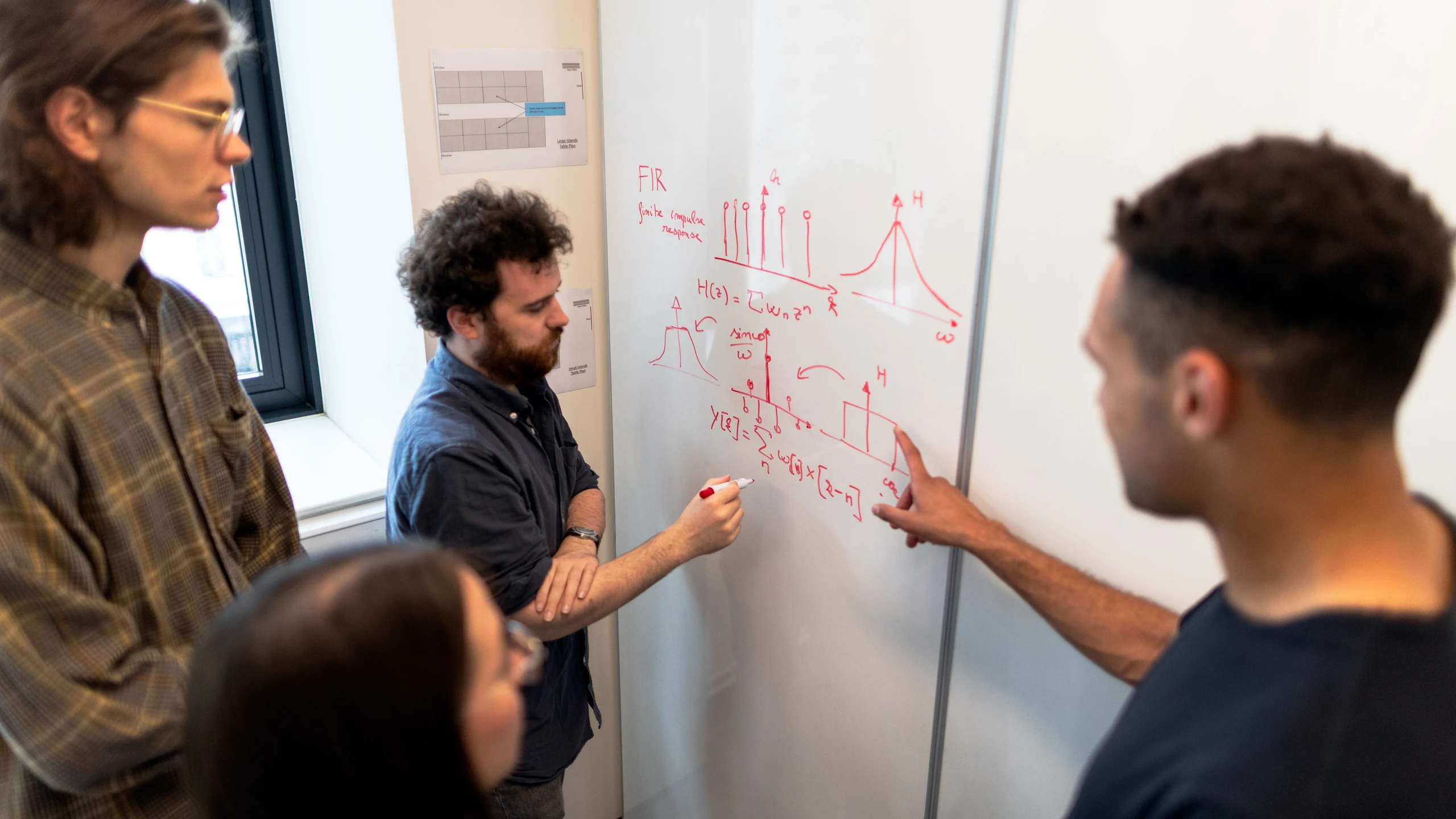
Four colleagues review notes and a sketch together on a whiteboard in a bright engineering workspace.

Learning and Deployment

Industrial AI research needs evidence about the task a method can support, the conditions under which it was evaluated, and the work required to keep it useful. A promising dataset score begins that inquiry. Physical observations, operator workflows, changing conditions, and integration effort determine what a later use decision can reasonably claim.

This category introduces five guides for technical leaders, researchers, engineers, and industrial partners. They explain how to design a bounded pilot, learn from limited observations, monitor change, evaluate transfer to another site, and assess value. Each guide uses an industrial example while keeping proposed research separate from completed deployments or verified returns.

Explore The Five Guides

Evaluating an Industrial AI Research Pilot

Learn how to turn a physical problem into an assessable study. A packaging inspection example connects the research question, baseline, independent reference, operator workflow, scope, and end decision. The guide distinguishes historical evaluation, live shadow observations, and an experiment that influences work, because those stages establish different claims.

Learning with Limited Industrial Data

A large number of sensor rows may represent only a small number of independent events. A rotating equipment example examines sparse fault observations, uncertain labels, simpler baselines, expert input, and deliberate selection of new measurements. It explains how development choices and evaluation splits affect what a small dataset can establish.

Model Drift and Monitoring

An input change, a measurement problem, and declining task performance require different evidence. A process energy forecasting example examines data quality, operating context, delayed outcome labels, alert review, and controlled model updates. The guide connects monitoring signals to a responsible response instead of treating every distribution change as an instruction to retrain.

Cross Site Transfer

Moving a method to another facility changes more than its software location. A visual inspection example examines sensors, materials, identifiers, labels, workflows, and local reference evidence. Learn how to distinguish unchanged transfer from adaptation and how to evaluate the target site without allowing local tuning to become its own proof of success.

Evaluating Pilot Value

A useful technical result may still require substantial integration or operator work. A maintenance prioritization example separates observed changes from estimated benefits, includes continuing costs, and examines competing explanations. The guide helps teams decide what evidence supports another bounded investment in research rather than announcing returns that have not been established.

Connect Learning To A Defined Decision

State who needs the result, what the method may influence, and how the relevant outcome will be observed. A recommendation to inspect equipment differs from a physical command. Preserve those responsibilities in the study and identify which evidence would justify continuing, revising, narrowing, or ending the work.

Choose a relevant baseline before interpreting a favorable result. Existing rules, operator procedures, or simple models may already perform well for routine conditions. Compare methods under matched cases, retaining unresolved work, failed cases, and human correction. Describe which operating regimes were represented and where the available observations remain sparse.

Keep The Evidence Traceable

Data and configuration history

Retain equipment identity, observation time, operating context, measurement quality, and the versions of models and processing steps. A changed sensor mapping can resemble a changed process. A new model evaluated on a familiar dataset can appear improved while leaving the future task unexamined.

New evidence can change the next step

A result may justify better measurement coverage, a simpler method, a different task, or an additional independent comparison. Treat those as concrete research decisions. Learning does not require silently changing an operational model after every event, and a pilot need not lead automatically to broader deployment.

Preserve Research Responsibilities

Knowledge Learning and Deployment addresses learning methods, transfer, monitoring, and release evidence. Measurement validity connects to Identification and Sensing; diagnosis to Equipment Health and Quality; decisions and interventions to AI Decisions and Control. Security and human oversight apply across the workflow. Their responsibilities remain explicit when a method changes or moves between settings.

Choose The Guide For Your Next Question


Start with pilot evaluation when framing a study. Choose the limited data guide when evidence is sparse, monitoring when conditions change over time, and cross site transfer when the setting changes. Use the value guide to connect measured outcomes and continuing costs to the next research decision.

Scroll to Top